
The English language is rich, diverse, and constantly evolving. One of its most fascinating aspects is the use of synonyms, which allow us to express the same idea in different ways. But have you ever wondered how synonyms became a part of English? Let’s explore the history of synonyms in the English language and how they shaped the way we communicate today.
1. Old English Influence (5th-11th Century)
2. The Norman Conquest (1066)
3. The Renaissance and Latin Influence (15th-17th Century)
4. Modern English (18th Century – Today)
Where Do Synonyms Come From?
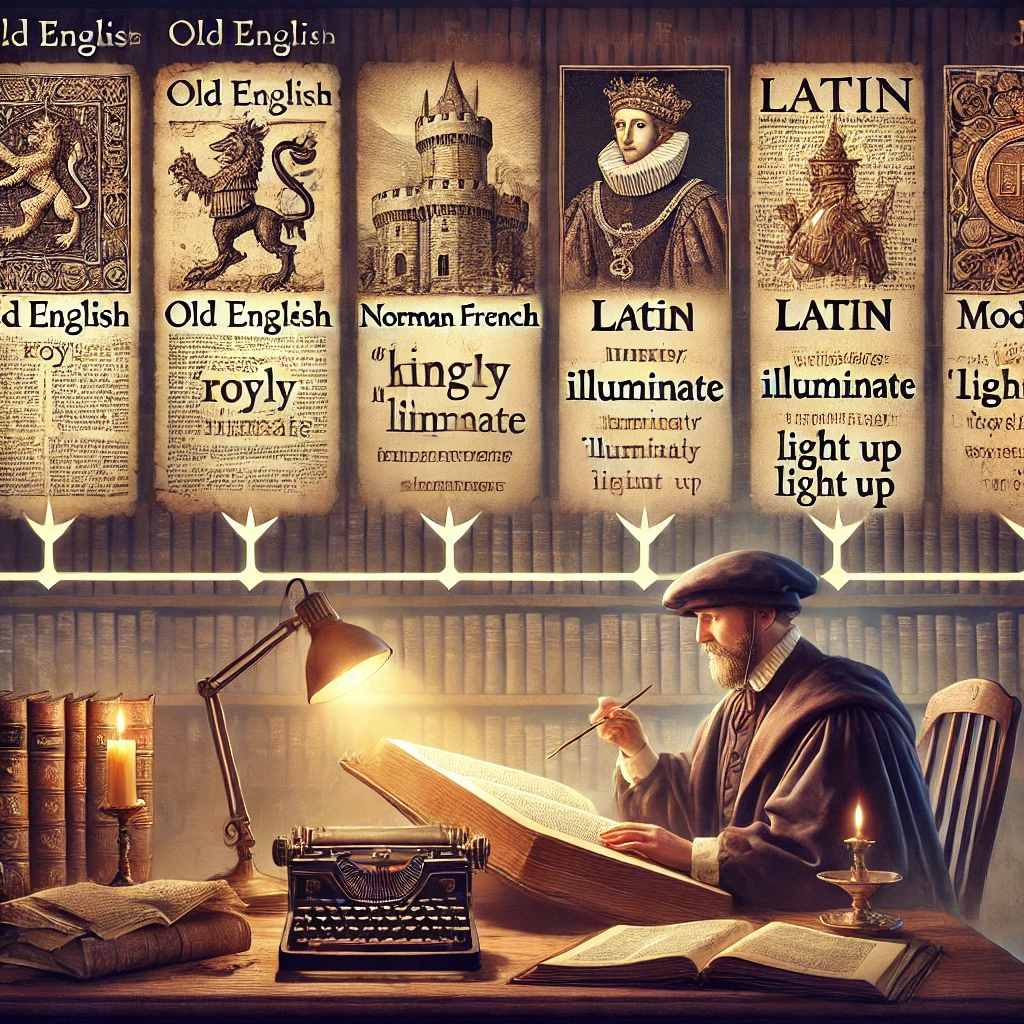
History of Synonyms in the English Language
1. Old English Influence (5th-11th Century)
English originated from Germanic languages brought to Britain by the Anglo-Saxons. During this time, the vocabulary was simple, and synonyms were rare. However, native English words like “kingly” and “holy” still exist today.
When the Normans invaded England, they brought French words into the language. This is why we have synonyms like:
- Royal (French) vs. Kingly (Old English)
- Legal (French) vs. Lawful (Old English)
- Purchase (French) vs. Buy (Old English)
This period introduced formal vs. casual synonyms, a pattern we still use today!
2. The Norman Conquest (1066)
The English language is a mix of influences from different languages. Over time, it has borrowed words from Latin, Greek, French, German, and other languages, leading to the development of multiple words with similar meanings—also known as synonyms.
3. The Renaissance and Latin Influence (15th-17th Century)
During the Renaissance, scholars borrowed words from Latin and Greek, leading to even more synonyms, such as:
- Eternal (Latin) vs. Everlasting (Old English)
- Illuminate (Latin) vs. Light up (Old English)
This made English more sophisticated and precise.
4. Modern English (18th Century – Today)
With the rise of dictionaries and education, synonyms became more standardized. Today, English continues to adopt new words from other languages, slang, and digital culture.
Why Do We Need Synonyms?
- To avoid repetition: Using different words makes writing more engaging.
- To express different tones: “Happy” and “joyful” have similar meanings but different emotional weights.
- To improve clarity: Choosing the right synonym can make communication clearer and more precise.
Conclusion
Synonyms are an essential part of the English language, shaped by history, invasions, and cultural exchanges. Whether you’re writing a professional email, a creative story, or a social media post, using the right synonym can make a big difference.
What’s your favorite synonym? Share in the comments!

2 thoughts on “The History of Synonyms in the English Language”
Absolutely! The history of synonyms reflects both linguistic enrichment and the complexities of language evolution. Would love to hear more of your thoughts on this